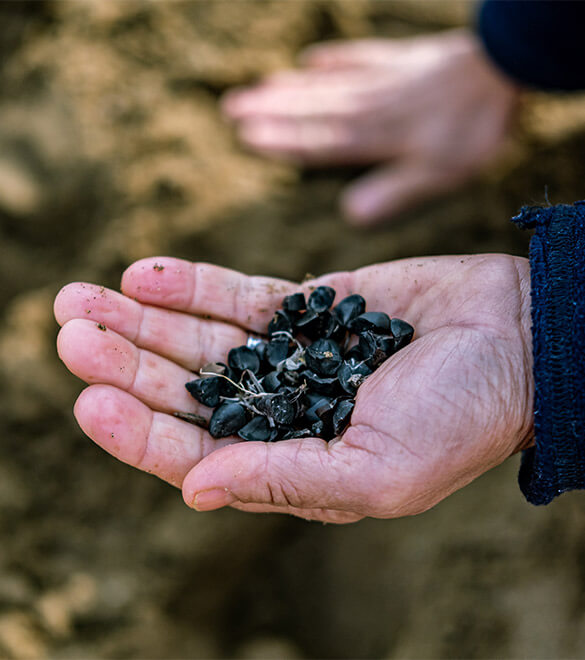
In line with our commitment to conserve terrestrial biological diversity and ensure the sustainable management of living natural resources, the naturally occurring and protected Sea Daffodil (Pancratium maritimum) and the regionally endemic Kilyos Knapweed (Centaurea kilaea Boiss) species in the coastal dune habitat of the Sakarya Gas Field were collected from the site and, through the successful efforts of the “Rare Plants Conservation and Research Group” comprising expert academics, as well as our competent environmental specialist and ecologist, were translocated in accordance with scientific principles to a coastal dune area with similar habitat characteristics, where they were successfully relocated and replanted.
The survival and adaptation rate of the planted species in their new habitat is 100%. In addition, a portion of the seeds collected from these species was delivered to the Gene Bank, and a portion was used again for re-sowing. These species have been placed under protection in their new locations with the support of monitoring and maintenance activities.
Furthermore, in collaboration with our expert teams and academics, within the scope of conserving marine biological diversity and ensuring the sustainable management of living natural resources, during the pre-construction, construction and operation phases of our project we carry out and report, at appropriate intervals, monitoring of:
Oceanography
Bathymetry
Sediment quality
Physical and chemical quality of seawater
Ecological monitoring (phytoplankton, zooplankton, benthic species, invasive species, fish species, monitoring of marine mammals, habitat assessment)
As part of our approach to minimise the impacts of our activities on the ecosystem and to conserve biological diversity and ensure the sustainable management of living natural resources while protecting local natural values, we follow international conventions and standards such as the IFC Performance Standards, the Equator Principles, the Bern Convention, the Convention on International Trade in Endangered Species of Wild Fauna and Flora (CITES), the Convention on Biological Diversity and the International Union for Conservation of Nature.
Furthermore, within the scope of our project, we carry out landscaping and afforestation works to eliminate the impacts of construction activities, ensure the sustainability of natural life and create new habitats for living organisms.